You make sense in context.
How you were raised, where your family comes from, and the world you live in all shape how you see yourself. I'm a BIPOC, first-generation Iranian American with a master's in Marriage and Family Therapy. Once registered, I'll offer relational, psychodynamic therapy for children, families, adults, and couples, in English and Farsi.
به فارسی هم صحبت میکنمI also speak Farsi
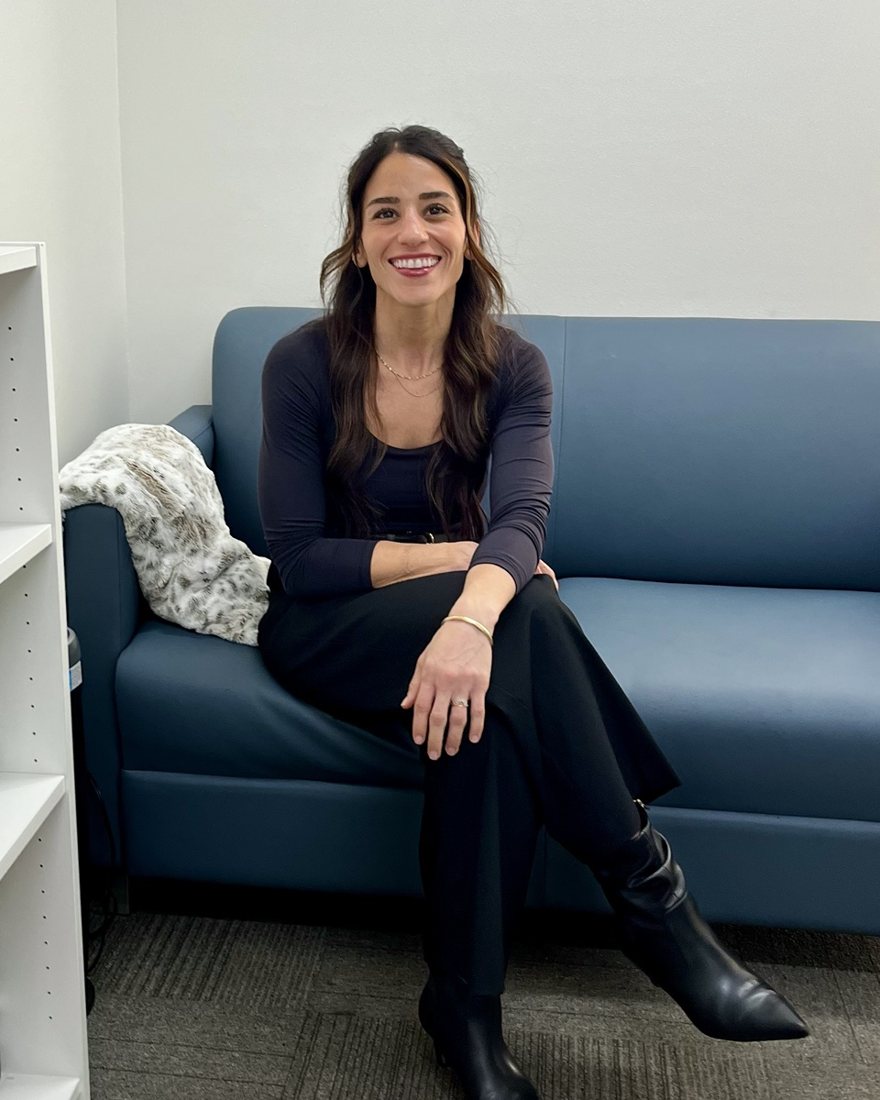
Maybe you
You don't need a perfect reason to start. Curiosity is enough.
Maybe you're hard on yourself. You've struggled with confidence for as long as you can remember, and the voice in your head is harsher than anything you'd say to a friend.
Maybe you've felt like an outsider: the only one who looked like you, caught between your family's culture and the one around you, or carrying expectations no one else seemed to see. Maybe you're noticing strain in your relationships and want to understand where it comes from.
Or maybe you're a parent watching your child struggle, and you want to understand what's underneath the behavior, not just make it stop.
Therapy can be a place to slow down and look closely: at how you were raised, the beliefs you formed about who you're allowed to be, and the parts of your story that haven't had much room anywhere else.
Culture & context
Your culture is part of your story.
Your struggles don't happen in a vacuum. Racism, immigration, gender roles, money, religion, and the news of the day all shape how we feel about ourselves and what seems possible. So do the cultural roots we carry, often without realizing it.
As the daughter of Iranian immigrants, I know what it's like to grow up between worlds and to feel othered. In our work, culture isn't a side topic. We'll explore how your roots, your family's history, and the world around you shape what you're facing today, because that context often holds the key to understanding it. I'll stay curious about your experience rather than assume it, and I'll never ask you to share my views.
If it matters to you to work with someone who shares a BIPOC or immigrant background, I understand why. And if that isn't what you're looking for, that's okay too. Everyone is welcome here.
Questions we might sit with
- Where did you learn that?
- Whose expectations are you carrying?
- Whose voice is that inner critic, really?
- What would change if you believed your needs were legitimate?
How I work
Every pattern has a history.
I'm deeply curious about what shapes a person: where you grew up, the family and culture around you, and the experiences that taught you what was safe or possible. Understanding that history isn't about blame. It gives us a more compassionate, more useful place to start.
Feeling seen first
Change usually begins in a relationship where you feel safe enough to be honest. I listen closely, follow your pace, and check my understanding with you rather than assuming.
Exploring the patterns
We look at the expectations you formed early, the roles you took on in your family, and how those still show up in your relationships, your work, and the way you speak to yourself.
Making room for context
Culture, migration, gender, money, and family structure all shape what feels possible. We can name those forces without assuming you share my views.
Choosing what comes next
Insight matters, and so does what you do with it. We'll think together about what you want to carry forward and what you might be ready to do differently.
My work draws on relational and psychodynamic thinking, alongside narrative and family-systems ideas. I use them as ways of asking better questions, not as formulas for who you should be.
Who I work with
Children, families, adults, and couples
Once I'm registered, these are the people I'll be working with.
Children & families
Kids often say through play what they can't yet say in words. In my training, I've used symbolic play, art, music, and games, and worked closely with parents so the whole family feels supported.
Adults
For people who want to understand why familiar patterns keep showing up, especially around family loyalty, identity, relationships, and big life transitions.
Couples
For partners stuck in the same cycle. We look at the pattern you create together and what each of you brings into it, rather than deciding who is right.
We might work well together if…
- You're hard on yourself and have struggled with confidence or feeling "enough."
- You've experienced otherness: being the only one, living between cultures, or feeling like you don't quite belong.
- You're a child of immigrants, holding your family's sacrifices and expectations alongside your own dreams.
- You're noticing strain in your relationships and want to understand the pattern, not just who's to blame.
- You want a therapist who takes culture, identity, and the wider world seriously.
- You're a parent who wants to understand your child's inner world, not just their behavior.
About
Hi, I'm Anita.
I'm a BIPOC woman and the daughter of Iranian immigrants, raised in a small farming town in southern Indiana. Inside our home was Persian food, music, and language; outside was a world where I often felt out of place. Living between those worlds made me curious about how we're raised, the stories we inherit, and the ways we learn to belong.
No matter the role, the thread has been the same: I care deeply about understanding people. I felt it as a Peace Corps Volunteer in Namibia, while living in Ghana, at the Social Security Administration, and in the corporate world. Along the way, I learned a lot about the pressures people carry at work, at home, and in their families.
I completed my MA in Marriage and Family Therapy at Alliant International University. In my training at The Maple Counseling Center, I worked with children and families in the clinic and at an elementary school in Santa Monica. I'm pursuing further training in psychoanalytic psychotherapy.
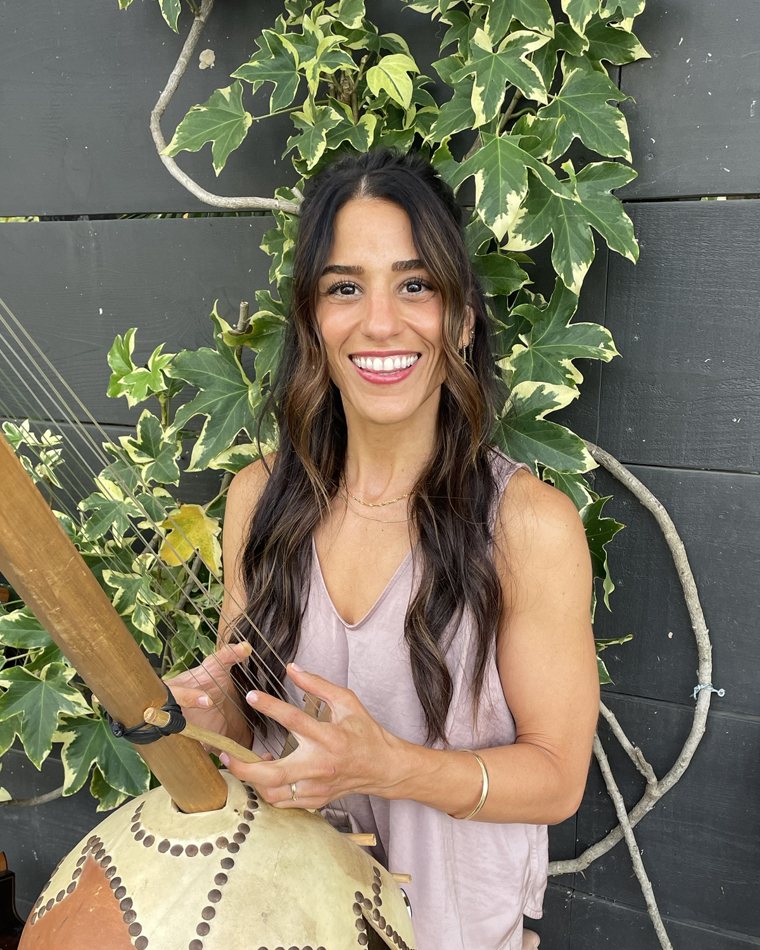
Outside of this work, I'm a musician and yoga practitioner. I play guitar and the kamale n'goni, a West African harp. Music and yoga have taught me a lot about listening, tuning in, and staying present with what is.
What I believe
- People make sense in context. No one arrives as a blank slate.
- Culture, race, migration, and power affect mental health, and we can talk about them openly.
- You are the expert on your own life. I bring attention, training, and curiosity.
- Feedback is encouraged. If something isn't helping, let's talk about it, understand what's happening between us, and work through it together.
- You can appreciate where you come from and still acknowledge the pain it may have caused. Both can be true.
Questions
Common questions
Are you seeing clients now?
Not yet. My Associate Marriage and Family Therapist registration is pending with the California Board of Behavioral Sciences. Once I'm registered and working with a practice, I'll update this site with how to reach me.
What is your style like?
Warm, curious, and collaborative. I listen closely and ask questions that help us look beneath familiar explanations, at a pace that respects your comfort.
Will you give me advice?
Sometimes I'll offer a perspective or help you think through options. My aim is not to make decisions for you, but to help you understand your own needs and values so your choices feel more intentional.
Do we have to talk about childhood?
No. We start with whatever brings you in. Early experiences are useful when they help explain what's happening now, but they aren't a requirement.
Will you work in Farsi?
Yes. I'm bilingual in English and Farsi, and once I'm registered I'll be able to work in either language. I also understand how it feels to grow up between two cultures.
What if I don't know what to talk about?
That's okay. We can begin with what's been on your mind, or even with not knowing where to start.
Contact
Get in touch
I'm not accepting clients yet. If you're a practice, colleague, or training program, I'd be glad to hear from you.
anitamazkoori@gmail.comPlease don't share personal health details by email.
If you're in crisis or thinking about harming yourself, call or text 988 (Suicide & Crisis Lifeline), or call 911.